Tampa’s growth from a 19th-century cigar hub into a sprawling Gulf Coast metro area has pushed construction into some tricky ground. The underlying Hawthorne Group limestone isn't uniform—it's riddled with soft clay lenses, phosphate seams, and the occasional buried sinkhole feature. When a five-story mixed-use building goes up in Channelside or a retention pond gets excavated near Ybor City, the lateral earth pressures demand more than a textbook solution. Our anchor design work accounts for Tampa's karst-influenced stratigraphy, where a CPT test can reveal sudden drops in tip resistance that signal a soft zone behind the proposed bond length. We don't just apply a generic factor of safety; we verify the actual grout-to-ground bond in weathered limestone because that's where Tampa projects either hold or fail.
In Tampa's limestone, the grout-to-ground bond is everything—get it right and the anchor holds; get it wrong and you are re-drilling through chert.
Our approach and scope
Site-specific factors
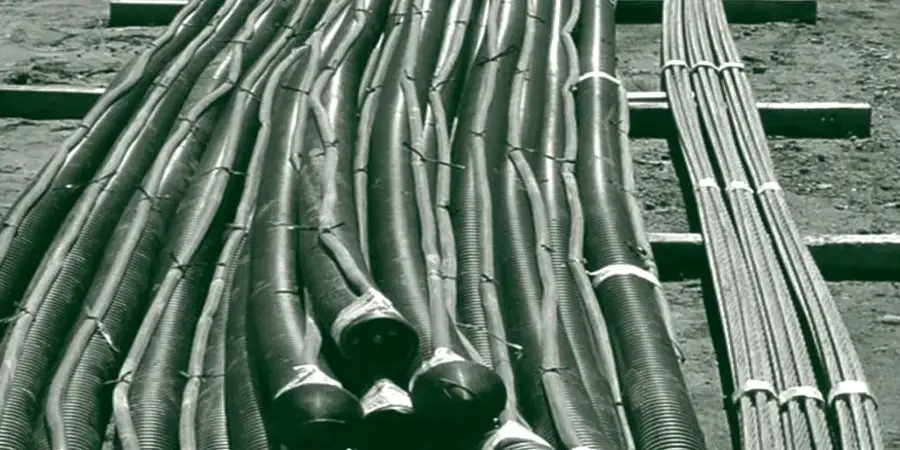
The rig arrives on a flatbed—usually a Klemm or Hutte rotary-percussive unit with a duplex drilling system to handle Tampa's collapsing sands above the limestone. The first challenge is always the overburden: loose, wet sand that wants to cave before the casing advances. The driller watches the return water for a sudden color change to green-gray, which means the bit hit the limestone, and that is when the real decisions start. If the bond zone intersects a vuggy layer or a clay-filled cavity, the grout takes more and the anchor capacity drops unless we stage-grout or re-drill. We insist on water take testing in every bond zone before grouting—skip that step and you might install a 200-kip anchor that only holds 80 kips. Tampa's water table sits just a few feet below grade in many areas, so tremie grouting and positive head pressure are non-negotiable.
Reference standards
IBC 2021 Chapter 18 (Soils and Foundations), ASCE 7-22 Minimum Design Loads for Buildings, PTI DC-35.1-14 Recommendations for Prestressed Rock and Soil Anchors, ASTM A615 Grade 150 for anchor bars, ASTM D3689 for anchor pullout testing
Other technical services
Tieback Anchor Design for Shoring
Design of temporary and permanent tiebacks for soldier pile and lagging walls, secant pile walls, and diaphragm walls. We deliver bond length calculations, tendon selection, and a full testing specification that your specialty contractor can execute without ambiguity.
Rock Anchor Design for Foundations and Slabs
High-capacity rock anchors to resist uplift on mat foundations, flood-proofed structures, and equipment pads. We address the Hawthorne limestone's variable RQD and include performance test criteria that confirm capacity before the concrete pour.
Typical parameters
Common questions
What does active and passive anchor design cost for a Tampa project?
For a typical Tampa shoring or retaining wall project, the engineering design for active or passive anchors runs between US$1,070 and US$3,740 depending on the number of anchor rows, complexity of the subsurface profile, and the level of corrosion protection required. A simple single-row tieback design on a residential lot falls at the lower end, while a multi-row anchored wall for a downtown excavation with performance testing specifications and long-term monitoring criteria sits at the upper end of that range.
How do you verify anchor capacity in Tampa's limestone?
We specify a combination of water take testing in the bond zone before grouting and a full-scale performance test on at least one anchor per row. The performance test cycles the anchor to 133% of the design load and measures creep. If the creep rate exceeds 0.04 inches per log cycle of time, the bond length gets revised. Proof tests on the remaining anchors confirm consistency.
What is the difference between active and passive anchors?
Active anchors are stressed and locked off at a predetermined load immediately after installation—they actively apply force to the structure. Passive anchors are installed without initial stressing; they only develop resistance as the structure moves and loads the tendon. In Tampa, we typically use active anchors for shoring walls where we want to limit deflection of adjacent streets or utilities, and passive rock bolts for slope stabilization where some movement is acceptable.
How does the high water table in Tampa affect anchor design?
The water table in much of Tampa sits within 5 to 10 feet of the surface, especially near the bay and the Hillsborough River. This means the overburden sand is often saturated and has reduced stand-up time during drilling. We design the unbonded length to extend well past the theoretical failure plane and specify tremie grouting under positive head pressure to prevent water intrusion into the bond zone. Corrosion protection also gets upgraded to Class I for permanent anchors below the water table.