Tampa sits barely 48 feet above sea level, and that low elevation shapes everything we do below ground. The upper layers here are mostly sandy soils interbedded with limestone and occasional clay lenses, which means bearing capacity can shift dramatically within a single lot. We run SPT borings to ASTM D1586 across Hillsborough County, giving engineers the N-values they need to design foundations that handle Florida's unique combination of wind loads, potential storm surge, and limestone solution features. In our experience, the difference between a straightforward project and a costly surprise often comes down to how the SPT data is interpreted for local geology. When sinkhole-prone areas near the I-4 corridor raise questions, we sometimes pair the SPT with MASW geophysics to map deeper anomalies without pausing the drill program.
In Tampa's sandy soils, a few feet of vertical change can mean the difference between a dense bearing layer and loose material—SPT spacing matters more here than in clay-dominated regions.
Our approach and scope
Site-specific factors
The IBC and ASCE 7 require site-specific geotechnical data for seismic design classification, and Tampa's Site Class D or E profiles depend heavily on SPT N-values in the upper 100 feet. Liquefaction potential is real here—loose, saturated sands below the water table can lose strength during a seismic event, even a moderate one originating from the Caribbean plate boundary. The Florida Building Code references ASCE 7 for lateral spreading and settlement estimates, none of which can be reliably calculated without corrected SPT data. What we see most often is that owners skip deeper borings to save a few days, only to discover during foundation construction that the limestone is riddled with soft zones or voids that the SPT spoon caught but the shallow tests missed. That kind of re-design costs exponentially more than a proper investigation up front.
Video resource
Reference standards
ASTM D1586 - Standard Test Method for Standard Penetration Test (SPT) and Split-Barrel Sampling of Soils, ASTM D2487 - Standard Practice for Classification of Soils for Engineering Purposes (Unified Soil Classification System), ASCE 7 - Minimum Design Loads and Associated Criteria for Buildings and Other Structures (Seismic Site Class), Florida Building Code - Building (Chapter 18: Soils and Foundations), IBC - International Building Code (Section 1803: Geotechnical Investigations)
Other technical services
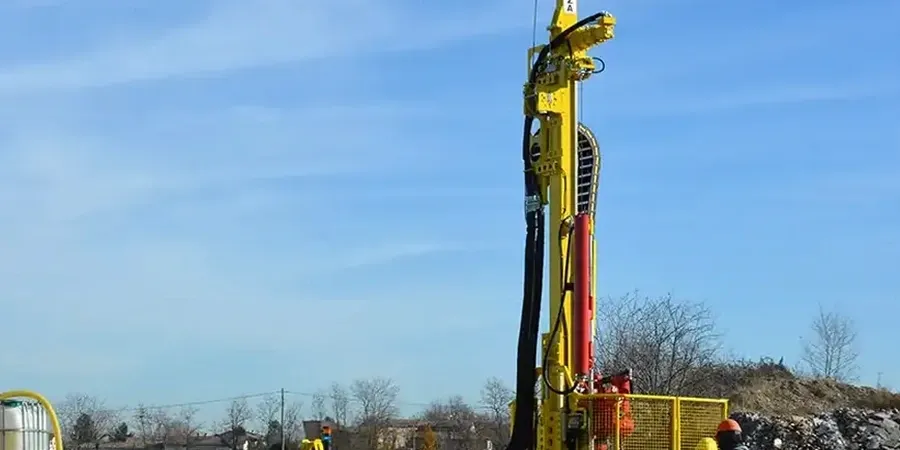
Geotechnical Drilling and SPT Sampling
Hollow-stem auger drilling with standard penetration testing at 2.5-foot or 5-foot intervals, logged to USCS classification, with groundwater monitoring per FDEP requirements.
Liquefaction Triggering Analysis
Corrected N-values fed into Seed & Idriss or Boulanger & Idriss procedures to estimate factor of safety against liquefaction for Tampa's Site Class D and E profiles under design earthquake loads.
Foundation Recommendation Reports
Bearing capacity, settlement estimates, and pile design parameters derived directly from SPT data, formatted for Florida Building Code submission and peer review.
Typical parameters
Common questions
How much does an SPT boring program cost in Tampa?
For a typical residential or light commercial project in Tampa with two to three borings to 30 feet, the cost generally falls between US$520 and US$700 per boring, which includes mobilization, drilling, SPT sampling, field logging, and the geotechnical report. Deeper borings, difficult access, or additional lab testing will push the total higher, but we deliver a fixed quote after reviewing the site plan and soil survey data.
How deep do SPT borings need to go for a foundation design in Tampa?
The Florida Building Code requires borings to extend to a depth where the stress increase from the foundation is less than 10% of the existing effective stress, or to refusal on competent rock. In Tampa's sandy soils, that typically means 30 to 50 feet for shallow foundations. For deep foundations like driven piles or drilled shafts, we often go to 60 feet or deeper to capture the full stratigraphy and evaluate the limestone interface.
How long does it take to get SPT results and the report?
Field drilling for a standard two-boring program usually takes one day. We deliver preliminary N-values and soil descriptions within 24 hours so the design team can start working. The final signed and sealed geotechnical report, including lab test results and foundation recommendations, is typically ready in five to seven business days.