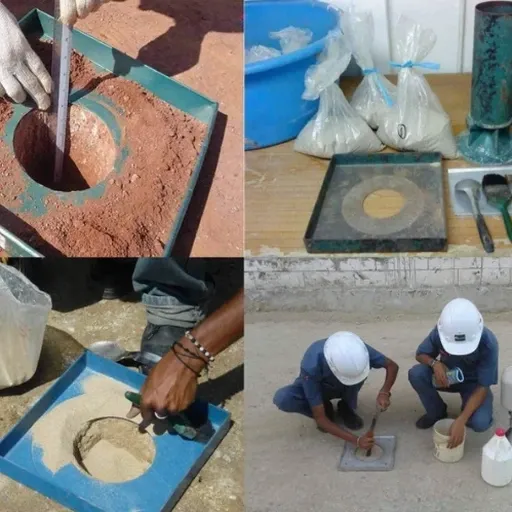
In Tampa, we see it constantly. A contractor gets compaction right on paper but the fill material doesn't match the proctor from the lab. That's where the field density test cuts through the guesswork. Our team runs the sand cone method according to ASTM D1556. We chase the number that matters. Actual in-place density. Not theoretical. Not assumed. Tampa's sandy soils and frequent shell layers make moisture control tricky. One afternoon storm can shift your compaction window by hours. The test gives you a direct measurement. We compare it to your lab proctor and tell you exactly where you stand. This matters for FDOT jobs. It matters for commercial pads near Westshore. And it matters for residential foundations in New Tampa where fill depth varies block by block. We complement the process with a plate load test when the structural engineer needs bearing capacity data beyond density alone.
Field density isn't about passing an inspection. It's about knowing your fill won't settle and crack six months after the certificate is signed.
Our approach and scope
Site-specific factors
The mistake we see too often in Tampa is simple. Someone runs the test on a lift that's too thick. Eighteen inches of fill with a six-inch sand cone hole. That test only reads the top third. The bottom two-thirds stay unknown. Everything looks fine until the first heavy rain season. Then the settlement cracks appear. Another error is testing material that's too coarse for the sand cone. If your subbase has large limerock pieces, the small excavation disturbs the gradation. The result isn't representative. Our technicians know when to stop. They know when to recommend a different method. And they check the proctor curve before heading to the field. A stale proctor from three months ago won't match today's borrow source. We verify. We ask questions. That's how you avoid a failed retest and a delayed pour schedule.
Video resource
Reference standards
ASTM D1556 - Standard Test Method for Density of Soil In Place by the Sand-Cone Method, AASHTO T 191 - Density of Soil In-Place by the Sand-Cone Method, ASTM D698 / D1557 - Proctor compaction reference standards, FDOT Specification Section 120 - Embankment (governing compaction requirements for state projects)
Other technical services
Proctor Compaction Testing
Laboratory standard and modified Proctor curves establish the target density for your fill material. We run ASTM D698 and D1557 on your specific borrow source.
Atterberg Limits & Classification
Knowing your soil's plastic limit and liquid limit tells you how it will behave during compaction. We classify every sample before density testing begins.
Proof Rolling Observation
After density tests pass, we observe proof rolling to catch soft zones that point measurements might miss. This is standard for building pads and parking areas.
Nuclear Gauge Testing
For large earthwork operations where speed matters, we offer nuclear density testing as a complementary method. Faster coverage. Same compaction confidence.
Typical parameters
Common questions
How much does a field density test cost in Tampa?
A single sand cone test typically ranges from US$110 to US$130. That covers the technician visit, the test, and the written report. Volume pricing drops the per-test rate. Most earthwork jobs need multiple tests per day depending on lift area and spec frequency.
How many density tests does my project need?
FDOT specs generally require one test per 1,500 square feet per lift. Commercial building pads often follow the same guideline. Residential foundations in Tampa may need fewer, but we recommend at least one test per 2,000 square feet on compacted fill. Your geotechnical engineer sets the final frequency in the project specifications.
Can you test in the rain?
Light rain is manageable if the excavation stays dry during the test. Heavy Tampa downpours change the game. Wet soil clogs the sand cone and skews moisture readings. We pause during storms and resume when the surface drains. The test hole must be protected from water entry throughout the procedure.
What percentage of compaction is required?
It depends on the structure. Structural fill under foundations typically requires 95% of modified Proctor maximum dry density. Utility trench backfill under pavement often calls for 98%. Landscape areas may only need 90%. Your project spec sets the number. We report the actual percentage and flag any lifts below the threshold.
How does the sand cone compare to a nuclear gauge?
The sand cone is direct. You weigh soil. You measure volume with sand. No calibration against a known density standard in the field. Nuclear gauges are faster for large areas but require licensing, radiation safety protocols, and more frequent calibration checks. In Tampa's sandy soils, both methods work. The sand cone is often the simpler choice for smaller sites and utility backfill where gauge access is tight.