Chapter 18 of the Florida Building Code (which incorporates IBC 2021) doesn't leave room for guesswork when it comes to deep foundations in Tampa. The city sits on a subsurface profile that alternates between loose surficial sands, pockets of organic silt, and the underlying Hawthorne Group—a mix of clay, sand, and carbonate rock that can dissolve unpredictably. Anyone who's driven piles near the Bay knows the real challenge isn't just bearing capacity; it's the differential settlement risk when the limestone has voids you didn't anticipate. That's where a site-specific pile foundation design becomes mandatory, not optional. We correlate SPT N-values from the field with laboratory strength parameters to size shafts and estimate tip resistance in rock, always cross-referencing the regional groundwater table, which in Tampa hovers barely three to six feet below grade. Before finalizing a pile layout, many contractors run a CPT test to get continuous stratigraphy across the site, especially near old sinkhole features.
A pile design without a limestone void survey in Tampa is just a wish. We map the rock surface with CPT and borehole data before placing a single pile.
Our approach and scope
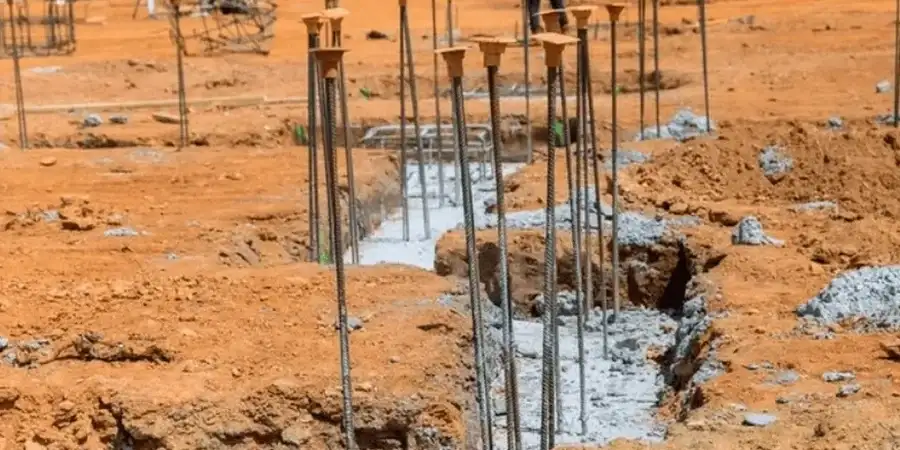
Site-specific factors
Designing piles in Tampa means you're dealing with two competing hazards: the hurricane season's lateral demands and the karst geology's vertical surprises. A Category 3 storm puts enormous overturning moments on pile caps, and if the upper 20 feet of soil is loose sand that could liquefy under cyclic loading, your lateral capacity drops just when you need it most. We model these transient conditions using p-y curves adjusted for liquefied soil strength, following the recommendations in Boulanger and Idriss (2014) for residual strength ratios. The other risk that keeps engineers up at night is a sudden void collapse under a pile tip. Even a small cavity in the limestone can cause a pile to punch through during driving, losing end bearing entirely. That's why we insist on probing the rock surface at every pile location with a pilot hole or CPT refusal depth, and why the design includes contingency for casing through unstable zones. Ignoring these local hazards doesn't just risk settlement—it risks a foundation failure that's visible from Dale Mabry Highway.
Reference standards
IBC 2021 (adopted by Florida Building Code 8th Edition), ASCE 7-22 Minimum Design Loads for Buildings, ACI 318-19 for structural concrete of drilled shafts, ASTM D1586 for Standard Penetration Test (SPT) in borings, ASTM D2487 for soil classification (USCS), FHWA GEC 10 for drilled shaft design in karst
Other technical services
Axial Capacity Analysis
We compute skin friction and end bearing for driven piles and drilled shafts using site-specific SPT data, lab-measured friction angles, and FBC Chapter 18 methods. Deliverables include a load-settlement curve and the factored resistance for LRFD design.
Lateral Load and Scour Evaluation
Using LPILE or GROUP, we model the pile group response under ASCE 7 wind loads and storm surge scour. The analysis confirms the required embedment depth and checks deflection at the pile cap under service loads.
Karst Mitigation and Rock Socket Design
Where the limestone surface is irregular or contains voids, we design the socket length to bridge cavities and specify the probe drilling protocol. The design follows FHWA GEC 10 guidelines adapted to Florida karst conditions.
Typical parameters
Common questions
What does a pile foundation design for a Tampa site typically cost?
The engineering fee for a pile foundation design package—including axial capacity calculations, lateral analysis, and the sealed report—generally falls between US$1,630 and US$5,810 depending on the number of pile types, the complexity of the subsurface profile, and whether a karst investigation is required. A straightforward single-family residence on 6 to 8 piles sits at the lower end, while a mid-rise structure with multiple load cases, group effects, and scour analysis moves toward the upper end.
How do you account for limestone voids in the pile design?
We first map the rock surface elevation and any anomalies using CPT refusal depths and rock coring at each boring location. If a void is suspected, we probe the pile location with a pilot hole advanced into competent rock. The design then includes a rock socket length that spans the void plus a minimum embedment into sound limestone, typically 3 to 5 feet beyond the cavity, following the FDOT Structures Manual approach for karst foundations.
What pile type works best in Tampa's soil conditions?
It depends on the bearing depth and the access constraints. Augered cast-in-place piles are common for mid-rise buildings where the Hawthorne limestone is within 40 to 60 feet—they can be drilled with a temporary casing through the sand and seated into rock. Driven precast concrete piles work well for larger projects but require careful handling of the dense sand layers and potential for refusal on shallow rock. We evaluate both options during the geotechnical phase before finalizing the design.
Does the pile design include lateral load from hurricane winds?
Yes, every design we produce for Tampa includes a lateral load case derived from ASCE 7-22 wind pressures for the specific Risk Category and exposure. We model the pile-soil interaction using p-y curves that account for the upper sand layer's stiffness and any strength loss under cyclic loading, then verify the pile head deflection stays within the structural engineer's tolerance—usually 0.5 inches for most buildings.