Tunneling through Tampa’s coastal plain demands rigorous compliance with the Florida Building Code and ASCE 7 standards. The city sits on a foundation of Miocene and Pleistocene sediments—interbedded sands, silts, and clays—that often lack the unconfined compressive strength required for conventional underground excavation. With the water table hovering just a few feet below the surface across Hillsborough County, dewatering and face stability become critical engineering controls before any tunnel boring machine advances. A proper geotechnical analysis for soft soil tunnels identifies zones of low effective stress where squeezing ground conditions can stall progress. Our laboratory runs ASTM D2487 classification and CU triaxial tests to define the undrained shear strength profile, giving contractors the data they need to select the right support pressure and lining design for Tampa’s challenging subsurface.
Tampa’s shallow water table and low-plasticity silts create a tunneling environment where face stability is governed by pore pressure, not just soil strength.
Our approach and scope
Site-specific factors
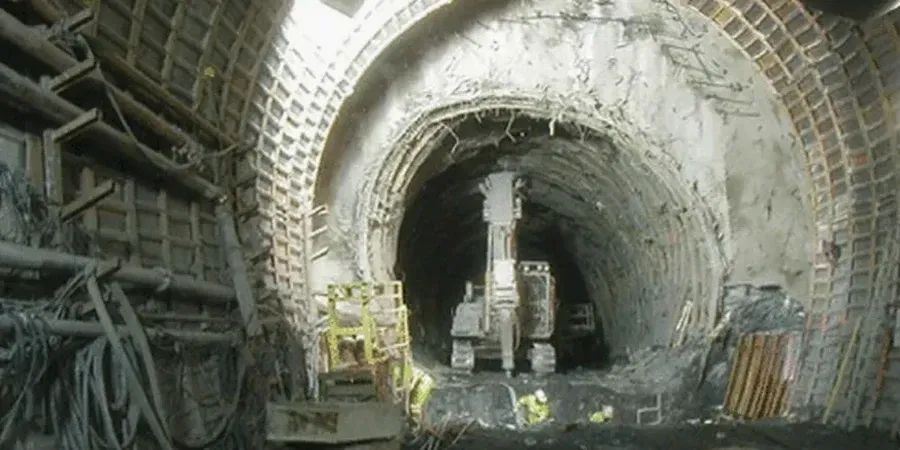
A recent utility tunnel project on the west side of the Tampa International Airport complex encountered a lens of highly sensitive clay at just 20 feet of cover. The excavation method initially assumed a stand-up time of six hours, but the face began to ravel within 45 minutes of cutting. A sudden loss of ground propagated upward, creating a sinkhole that impacted a service road. The failure mechanism traced back to a thin, discontinuous layer of montmorillonite-rich clay that was missed during the preliminary site investigation. Our geotechnical analysis for soft soil tunnels now emphasizes continuous sampling across the full alignment, with Atterberg limits testing at intervals no greater than five feet in zones where the soil exhibits a plasticity index above 25. In Tampa’s karst-influenced terrain, even a small undetected void can amplify settlement troughs to unacceptable levels.
Reference standards
ASCE 7-22 (Minimum Design Loads for Buildings and Other Structures), IBC 2021 (Florida Building Code, 8th Edition), ASTM D2487 (Unified Soil Classification System), ASTM D4767 (Consolidated Undrained Triaxial Compression Test), ASTM D1586 (Standard Penetration Test)
Other technical services
Alignment Soil Profiling
Continuous CPT soundings with pore pressure measurement along the tunnel centerline, calibrated with SPT borings to map stratigraphy and identify low-strength intervals.
Laboratory Strength Testing
CU and UU triaxial tests on undisturbed Shelby tube samples to determine the undrained shear strength envelope and stress-strain behavior under confining pressures expected at tunnel depth.
Ground Reaction Curve Analysis
Numerical modeling that predicts radial displacement as a function of support pressure, enabling the tunnel designer to balance face stability against surface settlement constraints.
Settlement Risk Assessment
Empirical and finite element evaluation of transverse and longitudinal settlement troughs, including assessment of potential damage to adjacent shallow foundations and buried utilities.
Typical parameters
Common questions
What makes Tampa’s soil particularly difficult for tunneling?
Tampa sits on interbedded layers of loose sand, soft silt, and low-strength clay that are often normally consolidated. The water table is high—typically between 1.5 and 3 meters below grade—so any open excavation requires continuous dewatering. Additionally, the underlying limestone can contain solution cavities, so the risk of sudden ground loss is always present.
How much does a geotechnical analysis for a soft soil tunnel cost in Tampa?
A complete investigation program along a tunnel alignment in Tampa generally ranges from US$4,510 to US$17,660, depending on the number of borings, the depth of the tunnel, and the laboratory testing regimen required. A shallow utility tunnel with limited access will fall on the lower end, while a deep transit tunnel with extensive triaxial testing and numerical modeling moves toward the upper range.
Which laboratory tests are essential for tunnel design in soft ground?
At a minimum, we run ASTM D2487 classification, Atterberg limits, and consolidated undrained (CU) triaxial tests to define the undrained shear strength profile. If the soil exhibits sensitivity, we also perform unconfined compression tests on undisturbed samples to quantify the loss of strength upon remolding. Permeability testing is critical for dewatering design.
How do you address the risk of sinkholes during tunneling?
We integrate electrical resistivity tomography or seismic refraction surveys along the alignment to detect voids and low-density zones before excavation begins. During drilling, we monitor for sudden drops in drilling fluid circulation or rod drops that indicate a cavity. Any anomaly is cross-checked with additional probing and, if confirmed, grouted prior to tunnel advance. More info.